
Lying Down on a Commercial Flight—The Safe Way to Fly
“Air ambulance is one of the first things that comes to mind when it comes to patient transport. But not every patient is so severely ill that they require a fully outfitted air ambulance. Sometimes the patient is well enough to travel on a commercial airplane in a horizontal position. This is where the stretcher flight service comes in.
To be successful, this service requires careful planning, good coordination with the airline, and a capable medical team. Beyaz Melekler (medflyservices.com) is dedicated to being the best support system for patients and their families in this difficult phase. Contact our team of professionals to fly confidently on your medical trip.
What is a Stretcher Flight?
A stretcher flight is a patient transfer service carried out by removing several seats from the economy class section of a commercial passenger aircraft and replacing them with a specialized patient stretcher. The patient travels in a lying position throughout the flight, accompanied by a professional medical team (usually a doctor and a nurse or paramedic).
This service is a much more cost-effective alternative to chartering a dedicated air ambulance and is preferred in situations where the patient must travel in a lying position but their condition is not critical.
Who Is Eligible for Stretcher Flight?
The stretcher-flying service is suitable for patients who match the following criteria:
- Patients Who Must Lie Down: Patients who cannot sit up owing to conditions such as spinal fractures, multiple traumas, or surgery to the legs or hips.
- Patient in Stable Condition: The patient’s medical condition is stable enough to not require any emergency intervention during the flight. They get the green light from their doctor to fly commercial.
- Long-Distance Transfers: A comfortable alternative to several hours spent in a road ambulance when a patient needs to be taken to a destination in another city or country.
- For those looking for a cheaper alternative to an air Ambulance: If the cost of an air ambulance is excessive, then a stretcher flight is a much more economical option.
How Does the Stretcher Flight Operate?
A stretcher flight takes careful planning and cooperation to be effective. The method normally involves the following stages:
Application and Medical Examination
The first step is to fully assess the patient’s condition. Medical history and doctor’s reports of the patient are reviewed, and travel requirements are checked. Decision as to whether patient is fit for stretcher flying.
MEDIF Form and Acceptance by Airlines
If you need a stretcher to fly, you must get special clearance from the airline. The MEDIF (Medical Information Form) is key to this process. This form details the state of the patient.
- the equipment and help they will need during the flight (oxygen, stretcher, special care, etc.);
- The patient’s need for a companion;
The doctor completes the form and sends it to the airline. The airline’s medical team will review the document and either clear the flight or ask for more information. Normally this permission process should be initiated not less than 48 hours before the flight.
Some airlines require passengers traveling on a stretcher to be accompanied by a carer and want a doctor’s certificate issued no more than 10 days before the date of departure.
Arrangements for In-Flight
Once the airline has approved, the proper arrangements are made in the cabin of the aircraft. Some seats in economy class are taken out in order to make room for the stretcher. The stretcher is normally separated from the rest of the passenger compartment by a curtain to protect the patient's privacy. There are also places for the patient’s relatives right next to the stretcher.
Patient Transfer and Patient Handoff
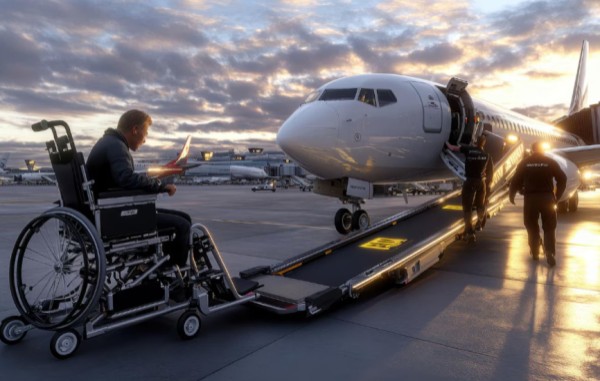
The patient gets picked up from their medical institution by road ambulance and is safely transferred to the airport. Special requirements (wheelchair, ambulift, etc.) are provided at the airport, and the patient boards onto the aircraft. The medical crew monitors the vital signs of the patient during the flight, provides their medication on a regular basis, and is on standby to intervene if any issue comes up. Upon Arrival: A ground ambulance transports the patient to a hospital or their apartment.
Stretcher Flights – Support & Medical Equipment
The stretcher flight service is uniquely designed to satisfy the demands of the patient. The following equipment may be carried on board:
- Portable ventilator (respirator)
- Oxygen cylinders for transport
- Bedside monitor (ECG, blood pressure, oxygen saturation, pulse)
- Infusion pumps (to deliver fluids and medication)
- Suction device (for clearing the airways)
- Defibrillator
- Emergency kit (medication, intravenous access kits)
For a more serious situation, but one that does not require an air ambulance, there is a specific portion called ‘Patient Transport Compartment (PTC)’ that can be employed. This portion is furnished with advanced medical equipment and is used for the transfer of intensive care patients.
Stretcher-Assisted Flight with White Angels (medflyservices.com)
The main aspects of the service are:
- Full Coordination: Professionals manage the entire logistics chain, including airline approval procedures (MEDIF form), ground ambulance transportation, and patient transfer.
- Experienced Medical Team: Doctors, nurses, and paramedics on duty are specialists with vast experience in emergency medicine and patient transport.
- 24/7 Service: Emergencies happen anytime. The Beyaz Melekler team (medflyservices.com) is always on standby for patients and their families.
- Customized Solutions: Each patient’s condition and needs are different. The transfer plan is customized to the patient’s medical condition and budget.
F.A.Q:
An air ambulance is a fully equipped in-flight intensive care unit for critically ill patients. A stretcher flight, on the other hand, is a cost-effective alternative on a commercial aircraft for patients in a more stable condition. An air ambulance is preferred for emergency and life-threatening situations, while a stretcher flight is preferred for planned and safe transfers.
The most important document for a stretcher flight is the MEDIF (Medical Information Form), completed by the patient’s doctor. In addition, a medical certificate confirming the patient’s fitness to fly, dated within the last 10 days, is also required.
The MEDIF (Medical Information Form) is a standard form used by airlines to assess passengers with medical conditions. This form provides information about the patient’s condition and the assistance and equipment they require. This form is mandatory to enable the airline to determine whether the patient can travel safely and to make the necessary arrangements.
One section of the MEDIF form is completed by the patient or a relative, while the other section is completed by the doctor treating the patient. The doctor is expected to confirm that the patient is fit to fly and to provide the necessary medical information.
A request for a flight requiring a stretcher must be submitted to the airline at least 48 hours before the flight. This timeframe is necessary to allow the airline to complete the medical clearance process and make any necessary in-flight arrangements (such as removing seats, etc.). While this timeframe may be shortened in emergency situations, this cannot be guaranteed.
Yes, it is generally compulsory for patients traveling on a stretcher to be accompanied by an accompanying person. The accompanying person is there to provide any support the patient may need in an emergency and to assist the cabin crew. A separate ticket is issued for the accompanying person.
During a flight with a patient on a stretcher, a professional medical team is present alongside the patient. This team usually consists of a doctor and a nurse or paramedic. The team monitors the patient throughout the flight and intervenes in the event of a medical emergency. A family member may also be on board as a companion.
Yes, the patient’s oxygen requirements can be met on a stretcher flight. This is specified on the MEDIF form and carried out subject to the airline’s approval. While the airline may provide oxygen, the medical team may also bring their own portable oxygen equipment.
Yes, the patient’s IV treatment can be administered during a stretcher flight. The medical team can provide the necessary medication and fluid support throughout the flight.
The cost of a stretcher flight varies depending on factors such as the distance traveled, flight duration, the airline, the equipment used, and the qualifications of the medical team. It is significantly more economical than an air ambulance.
This depends on the patient’s health insurance or travel insurance policy. Some insurance plans may cover the costs of a flight on a stretcher if a doctor deems it necessary. It is important to contact your insurance company for definitive information.
Many major airlines offer a stretcher flight service, subject to prior application and medical approval. Turkish Airlines is among the airlines that provide this service.
Relatives are allocated seats as close as possible to the area where the stretcher is located. This allows them to remain by the patient’s side throughout the flight.
The area where the stretcher is located is usually separated from the rest of the passenger cabin by a curtain. This ensures the patient’s privacy is maintained during treatment and care procedures.
If the patient’s condition is critical, if continuous intensive care support is required, or if there is a high likelihood of an emergency intervention during the flight, an air ambulance should be preferred over a flight with a stretcher. The airline’s medical unit makes this decision by assessing the MEDIF form.
The organization time usually varies between 2 and 5 days, depending on the airline’s approval process. In emergency situations, this timeframe may be shortened, but a minimum of 48 hours is required.
Yes, a stretcher flight service is also available for pediatric patients. In such cases, equipment suitable for the child’s condition and healthcare staff experienced in pediatrics are assigned.
Beyaz Melekler (medflyservices.com) professionally manages the entire stretcher flight process (airline approvals, MEDIF form, organization of the medical team, ground ambulance coordination, and patient handover) from start to finish. With experienced medical staff and a 24/7 service ethos, they are there to support patients and their families.