
A Safe Journey Through the Skies
In healthcare, when an emergency arises, being in the right place at the right time can save lives. But what if that right place is hundreds or even thousands of kilometers away? This is where air ambulance and medical escort services come into play. These two services are vital solutions that address different needs in patient transport yet share a common goal: to get the patient to their destination as safely as possible.
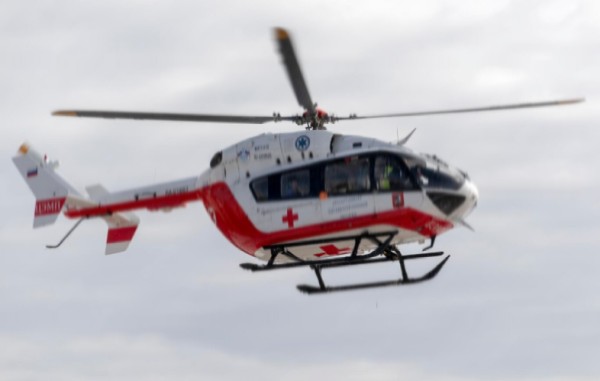
Air ambulance and escort services are two distinct yet complementary aspects of patient transport. When speed and equipment are essential to save the life of a critically ill patient, the air ambulance is the ideal solution; for patients in a better condition who simply need to travel under supervision, the escort service is the ideal solution.
The common thread linking both services is safety. Knowing that the patient and their loved ones are in the best possible hands throughout the journey is one of the most important aspects of the treatment process. Beyaz Melekler operates with this in mind, making it a principle to stand by every individual who prioritizes their health. You can contact our team of experts to determine the right option and set off with confidence.
What is an air ambulance?
An air ambulance is an airplane or helicopter that has been converted into a hospital intensive care unit (ICU). These specially equipped aircraft are used to transport patients in critical condition from one healthcare facility to another, and sometimes even from the scene of an accident to a hospital.
Why is an air ambulance necessary?
In some situations, a road ambulance or commercial flight is not sufficient. The reasons for choosing an air ambulance are as follows:
- Emergencies and Life-Threatening Conditions: It is the fastest transport option in situations where time is of the essence, such as heart attacks, strokes, multiple traumas, or organ transplants.
- Long Distances: For inter-city or international transfers, a journey that would take hours by road ambulance is reduced to minutes by air ambulance.
- Challenging Geographical Conditions: Helicopter ambulances are vital for evacuations from mountainous, island, or remote areas that are inaccessible to road ambulances.
- Risk of Infectious Diseases: By transporting the patient in specialized isolation units, the risk of transmission to other passengers or healthcare staff is minimized.
What’s Inside an Air Ambulance?
An air ambulance is much more than just an ordinary airplane. The equipment on board makes it virtually a mobile hospital ward:
- Advanced Life Support Units: Ventilator (respiratory support device), defibrillator, and bedside monitors (heart rate, blood pressure, and oxygen saturation).
- Specialized Equipment: Infusion pumps (for administering fluids and medication), suction devices (for clearing the airways), and oxygen cylinders.
- Special Design: Patient stretcher, specialized mounting points for securing equipment, and the ability to adjust the cabin pressure according to the patient’s condition.
For Which Types of Patients Is an Air Ambulance Suitable?
An air ambulance is intended for patients whose condition is serious and unstable. The patient groups eligible for this service are as follows:
- Intensive Care Patients: Patients who are on a ventilator, require continuous medication support, or need close monitoring.
- Patients Requiring Transport in a Recumbent Position: Patients for whom sitting is inadvisable or who must remain completely recumbent due to conditions such as spinal or multiple bone fractures.
- Patients with Compromised Immune Systems: Patients who need to be protected from crowded environments (such as commercial flights), for example, those undergoing chemotherapy or following an organ transplant.
- Organ transplant teams: Situations where a living organ (such as a heart or liver) needs to be delivered to the recipient as quickly as possible.
What is a Medical Escort?
An escort service involves a professional healthcare professional (nurse, paramedic, or doctor) accompanying a patient whose condition is stable while they travel on a commercial flight. This service is a much more cost-effective alternative to an air ambulance and acts as a safe bridge for the patient.
Which types of patients are appropriate for the medical escort service?
The escort service is appropriate for patients who satisfy the following criteria:
- Medically Stable: Patient has been cleared by their physician to travel by commercial airplane.
- Able to Sit Upright The patient is physically capable of sitting upright (except for special stretcher services) during take-off and landing.
- Anticipated Care Needs: No imminent need for urgent or life-saving care is foreseen during the travel.
Scope of Medical Escort Service
A professional medical escort service. More than just sitting at the patient's side. The technique is done on a ‘bed-to-bed’ basis. The medical escort personnel have the following duties:
- Pre-Travel Prep: Completion of the airline’s medical clearance documents (MEDIF). Liaison with the airline for any medication and equipment required during the journey (portable oxygen, infusion pump, etc.).
- Hospital and Airport Transfer To receive the patient from the hospital room and transfer them to the airport by road ambulance in a secure manner.
- Airport procedures: check-in, passport control, and coordination with the airline for special requirements (wheelchair and stretcher).
- In-Flight Monitoring: Monitoring the patient’s vital signs (blood pressure, pulse, oxygen levels) on an ongoing basis, dispensing medication in a timely manner, intervening in case of any discomfort, and offering emotional support.
- Arrival and Handover: Coordination with the patient receiving team or ground ambulance at the destination airport and passing the patient over to the hospital for further treatment or to family.
Options for Travelling with a Caregiver on a Commercial Flight
There are two main options for traveling on a commercial flight accompanied by a caregiver:
- Traveling in a Seat: This is the most common option. The patient travels in a more comfortable seat, such as in business or first class, while the caregiver sits next to or near them.
- Stretcher Transfer on a Commercial Flight: If the patient must travel lying down and their condition is stable, some airlines can remove a few seats in economy class to set up a stretcher. This option is much more economical than chartering a private air ambulance, but the airline approval and planning process takes longer.
Differences Between Air Ambulance and Medical Escort Services
To choose the right service, it is essential to fully understand the differences between these two options.
| Feature | Air Ambulance | Medical Escort |
|---|---|---|
| Patient Condition | Critical, unstable, requiring intensive care. | Stable, fit for commercial flight, requiring predictable care. |
| Aircraft Type | Specially equipped, chartered aircraft. | Commercial airline. |
| Equipment | Fully equipped intensive care unit (ventilator, monitor, defibrillator). | Portable emergency kit, patient medications, portable oxygen if necessary. |
| Cost | High. | Lower (compared to air ambulance). |
| Planning Time | Quick, can be organized immediately for emergencies. | May take several days, depending on airline approvals. |
| Patient Position | Fully recumbent (lying down) during travel. | Seated travel (except for special stretcher options). |
| Suitable For | Heart attack, stroke, organ transplant, severe trauma, ventilator-dependent patients. | Post-surgery patients under control, stable patients with chronic illnesses, elderly or individuals with reduced mobility. |
Safe Travel with Beyaz Melekler (medflyservices.com)
When receiving services in a sensitive area such as healthcare, the organization's references, the quality of the equipment it uses, and the professionalism of its team are of paramount importance. White Angels (medflyservices.com) aims to make a difference in both air ambulance and patient escort services in the following areas:
- 24/7 Availability: Emergencies know no time. Medflyservices.com’s team of experts is on standby for patients and their loved ones every day of the week, at any time of day.
- Personalized Planning: Every patient is unique. The transfer plan is tailored specifically to the patient’s medical condition, budget, and travel distance.
- Official and Transparent Process: All bureaucratic processes—such as airline approvals, visa procedures, and hospital correspondence—are professionally managed to ease the burden on patients and their families.
- Experienced Team: The doctors, nurses, and paramedics on duty are experienced staff who have been trained to international standards in emergency medicine and patient transport.
F.A.Q:
An air ambulance is a fully equipped in-flight intensive care unit for patients in critical condition. It is fitted with advanced life-support equipment such as ventilators, defibrillators, and bedside monitors. An escort service, on the other hand, involves a professional healthcare professional accompanying patients whose condition is stable while they travel on a commercial flight. An air ambulance is ideal for emergency and life-threatening situations, while an escort service is ideal for planned and safe transfers.
In an emergency, an air ambulance is usually organized so that it can take off within 1–4 hours. The time taken depends on the patient’s location, the nearest air ambulance base, weather conditions, and the speed at which the necessary flight clearances are obtained. Professional organizations such as Beyaz Melekler (medflyservices.com) are on standby 24/7 to respond to emergency calls.
The companion service can usually be organized within 24–72 hours, subject to the airline’s medical approval process. In special circumstances, such as stretcher transfers, this period may be extended to 3–5 days due to the airline’s seat removal procedure and approvals. It is important not to rush the planning process for the patient’s safety.
Yes, there is usually space on the air ambulance for one accompanying person. This person may be a relative or a first-degree family member of the patient. However, this will be clarified prior to the flight, taking into account the aircraft’s capacity and the patient’s condition. The accompanying person is also expected to comply with flight regulations and the medical team’s instructions throughout the journey.
With the medical escort service, the patient’s oxygen requirements are planned in detail prior to transfer. There are two options:
- Obtaining in-flight oxygen from the airline (requested in advance with a doctor’s certificate)
- The escort team bringing a portable oxygen device and cylinder with them
Throughout the flight, the patient is continuously monitored using a pulse oximeter, and their oxygen saturation is checked at specified intervals.
The cost of these services varies depending on a number of factors:
- Distance travelled (flight duration)
- Number of patients and escorts
- Type of aircraft and equipment required
- Qualifications of medical staff (doctor, nurse or paramedic)
- Ground ambulance transfers and other logistical services
An air ambulance is significantly more expensive than an escort service.
This depends on the individual’s health insurance or travel insurance policy. Some private health insurance policies may cover air ambulance costs within certain limits if deemed necessary by a doctor. Travel insurance policies generally cover emergency evacuations. However, every policy is different; it is important to contact your insurance company and review your policy in detail for accurate information.
Air ambulances can transfer patients to almost any country in the world, subject to international flight permits and diplomatic procedures. However, some countries may apply specific procedures regarding airspace overflight or landing permissions. Experienced organizations such as Medflyservices.com manage these bureaucratic processes on behalf of the patient and their relatives and obtain all necessary permissions.
Yes, air ambulances are frequently used for organ transplant transport. It is of vital importance that a living organ (heart, liver, or kidney) reach the recipient as quickly as possible. On such flights, specialized refrigeration units and protective equipment are provided for the transport of the organ. Furthermore, the organ transplant team also travels on board the aircraft, and the timing is planned with the utmost care.
Escort staff are trained in advance to deal with potential emergencies and carry an emergency kit with them. In the event of a serious deterioration in the patient’s condition:
- First aid (administration of medication, oxygen support, basic life support) is provided
- The situation is reported to the cabin crew and the captain
- A request is made for an emergency landing at the nearest airport or for diversion to a medical facility
- The referring and receiving medical facilities are informed immediately
Ensuring that medical records are transported in full during patient transfer is critical for continuity of care. When traveling by air ambulance or with an escort service, the following documents are carried with the patient:
- Discharge summary (summary of the patient’s condition)
- Up-to-date laboratory results
- Imaging reports (MRI, CT, X-ray)
- List of medications used and their dosages
- Completed patient transfer forms and authorisation documents
These documents are handed over in full to the receiving healthcare facility or the relevant doctor upon arrival.
Yes, these services are also available for infants and children. However, the transport of pediatric patients requires specialized equipment (pediatric ventilators, infant incubators, and pediatric blood pressure monitors) and healthcare staff with experience in pediatrics. An air ambulance is suitable for premature babies or children in critical condition, while an escort service is appropriate for those in a more stable condition.
The transfer process for elderly patients and individuals with limited mobility requires special care and planning:
- They are collected from their bedside by a road ambulance and taken to the airport
- Transport within the airport is provided by wheelchair or stretcher
- They are seated on the aircraft accompanied by a member of the medical team or a flight attendant
- If necessary, their position is adjusted during the flight to prevent pressure sores
- On arrival, they are safely transported by road ambulance to the new healthcare facility or their place of residence
Beyaz Melekler offers a service philosophy that makes a real difference in patient transport:
- 24/7 Availability: Emergencies know no time; our specialist team is on standby every day of the week, at all hours
- Personalised Planning: Every patient is unique; the transfer plan is tailored to the patient’s medical condition, budget and distance
- Official and Transparent Process: All bureaucratic procedures (airline approvals, visas, correspondence with healthcare organisations) are professionally managed
- Experienced Team: The healthcare staff on duty are trained to international standards and have experience in patient transport
- Patient Privacy: Patient confidentiality and privacy are protected to the highest standard throughout the entire process